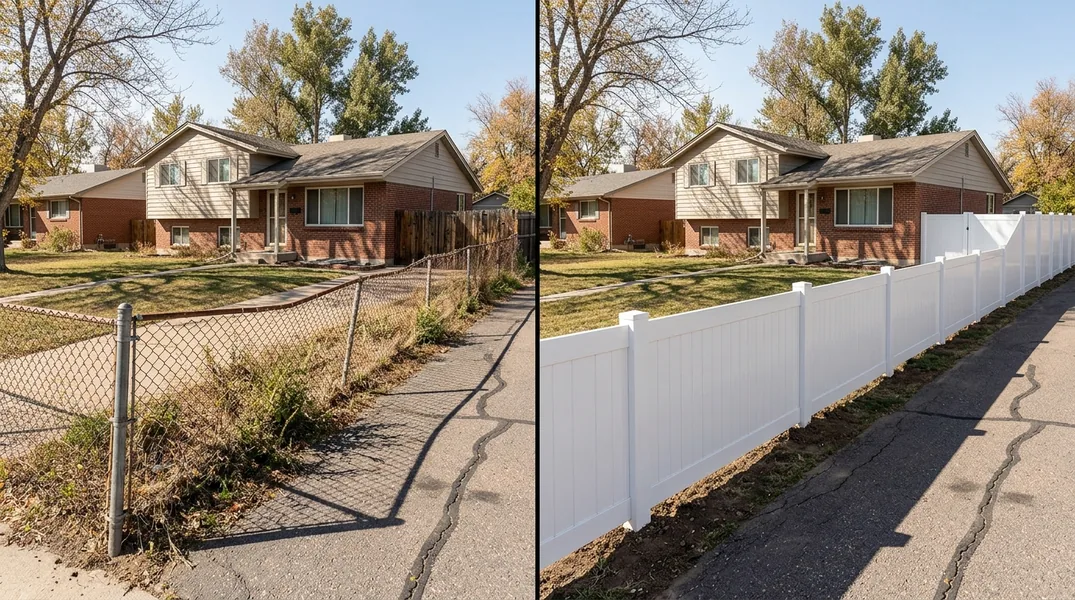
Fence Company in Denver, CO: Installation, Repair & Gates
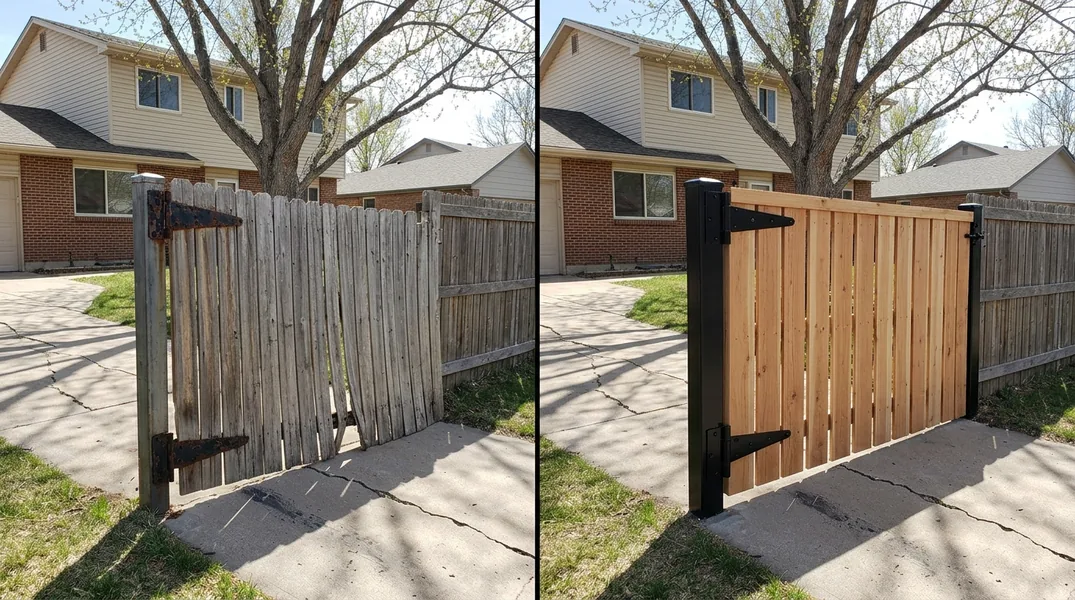
Denver Fence Contractors serves homeowners across Denver and the surrounding areas, including Aurora, Lakewood, Thornton, and Arvada. Whether you are searching for a fence company near me in Denver or need work done in a neighboring community, we handle the full scope of fencing work: new installation in wood, vinyl, chain link, and aluminum or ornamental iron; repair of existing fences; gate installation and repair; and storm damage restoration. The same crews who quote your project are the ones who build it, and they understand the ground conditions and weather patterns that affect how a fence performs in this region.
A fence is one of the most visible and functional improvements on your property. It defines your boundary, provides privacy and security, contains pets and children, and marks the character of your home. When a fence fails, it fails visibly and often suddenly. Our job is to diagnose why it failed, tell you whether it can be repaired or should be replaced, and provide a free estimate that reflects the actual scope of work your property needs.
Why Fences Lean in Denver: Clay Soil and Rotted Posts
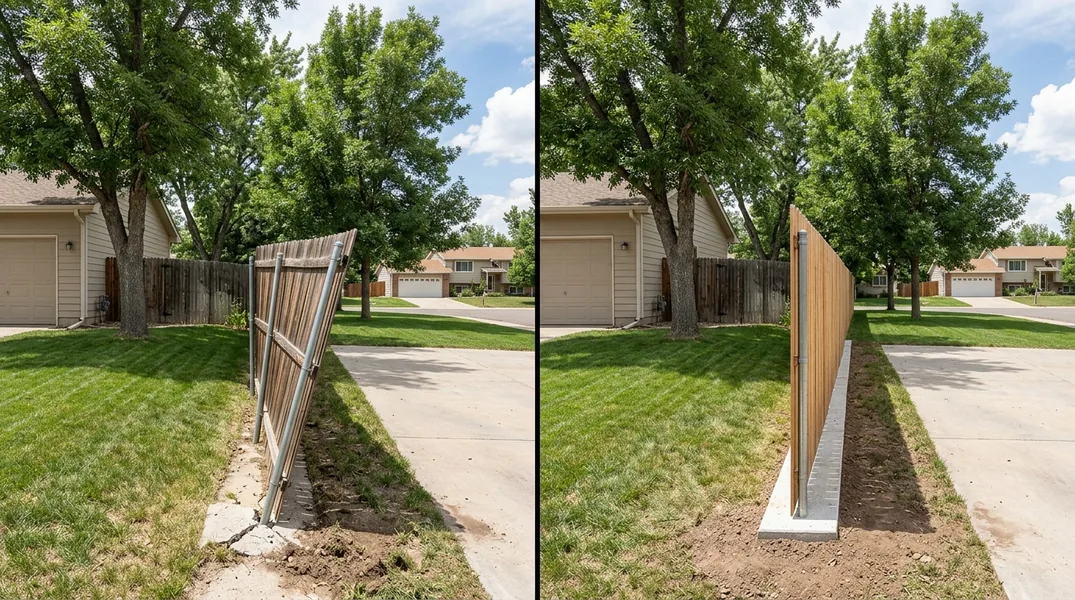
Most leaning fences in this area are not a panel problem. They are a post problem. The clay soil here expands when wet and contracts when dry, working the posts back and forth season after season. Over time, this movement racks the posts out of plumb, and once a post starts to lean, the load it carries shifts, accelerating the lean. At the same time, moisture collects at the ground line, exactly where the post carries the most load, and wood begins to decay from the inside out. By the time a homeowner calls, the fence may look intact from a distance, but the posts have failed.
We read a fence line by walking the entire run, testing every post rather than just the one that moved visibly. We check whether the concrete footing itself has heaved or whether the post has rotted inside a sound footing. This diagnosis determines whether repair is the right answer. A fence with sound pickets and rails and a handful of failed posts is worth fixing. We reset or replace those posts, and the rest of the fence stands another decade or more. But a fence where posts have decayed along the whole run is at end of life. Repairing it section by section costs more over five years than replacing it once. We quote both options so you can make an informed choice. On rotted wood, we replace what has failed. Moisture at the ground line is the cause. We do not perform termite or pest inspections, apply chemical treatments, or carry out pest control, which is a separate regulated trade. Call (720) 573-2902 to discuss what your fence needs, or request a fence post repair and replacement assessment to learn whether your fence can be restored or should be rebuilt.
The difference between a repair that holds and one that fails again in two years comes down to how the posts are set. Posts set in tamped earth alone will move. Posts set in concrete, with proper depth and diameter, remain stable through seasonal ground movement. When we repair, we set new posts in concrete. When we replace, we do the same. This is the standard that makes a fence last.
Storm Damage Fence Repair in Denver
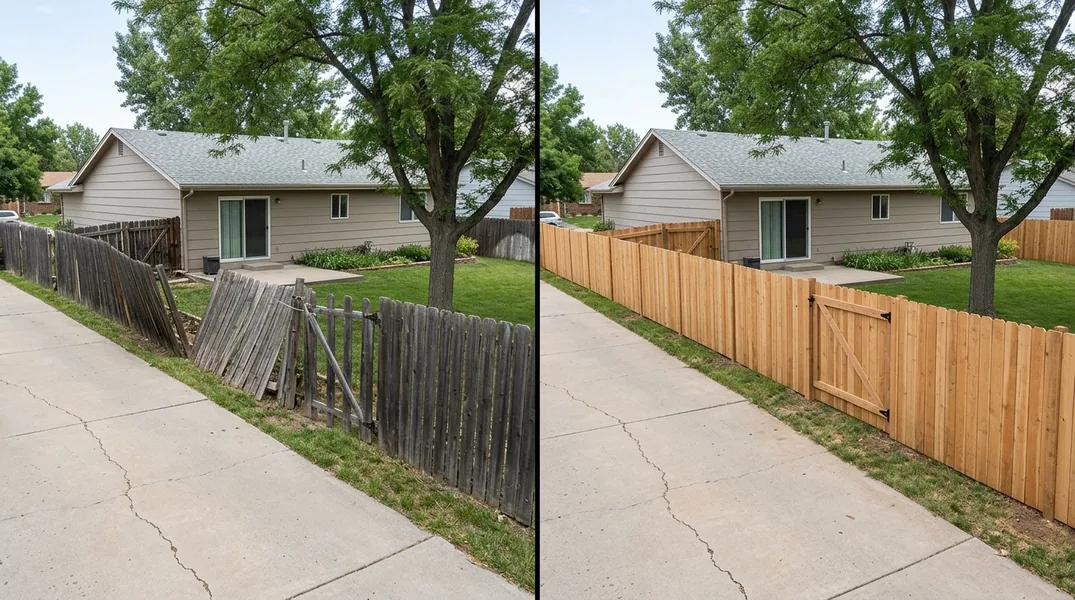
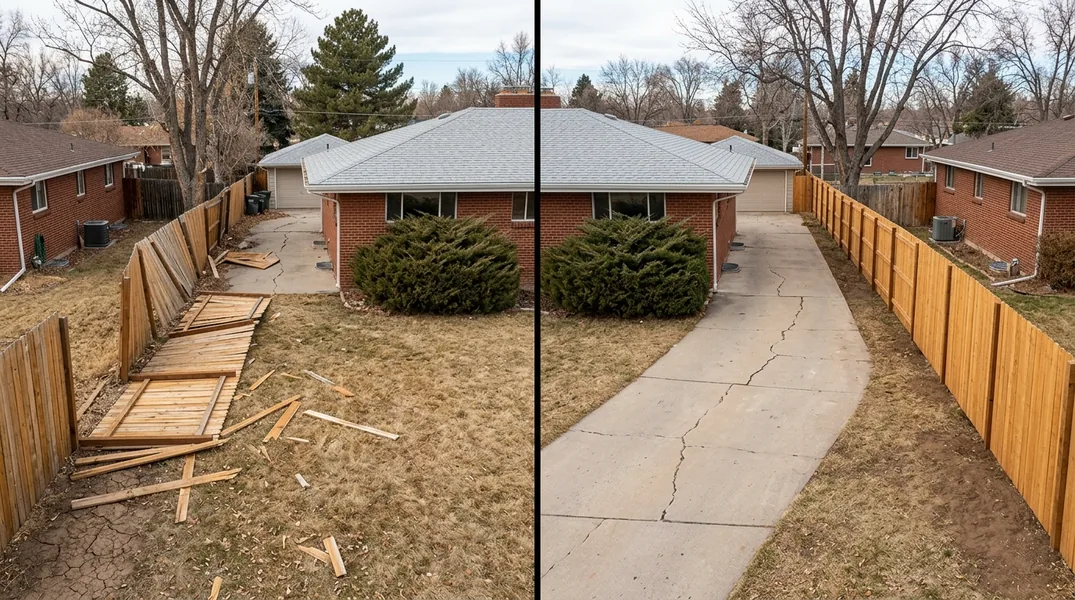
Severe wind and storm damage can push whole runs of fencing over on the same line, snap posts at grade, or strip panels away. When this happens, the fence needs to be rebuilt, and the rebuild is an opportunity to install better posts than the ones that failed. We provide a free damage assessment, photograph each section of the damaged fence, and prepare a written estimate that you can submit to your insurance carrier if you choose. This documentation helps you understand the scope and cost of restoration.
Coverage decisions rest with your insurance carrier. We help you document the damage, but we do not represent you to the insurer, do not guarantee approval of any claim, and do not cover deductibles or absorb costs on your behalf. If your policy covers fence damage, your carrier will determine what they will pay. Our role is to give you an honest estimate of what the repair or replacement will cost, so you know the full picture before you file. For storm damage fence repair, call us as soon as you can to document the damage while it is fresh.
Cedar, Pine, Vinyl or Chain Link: Choosing for This Climate
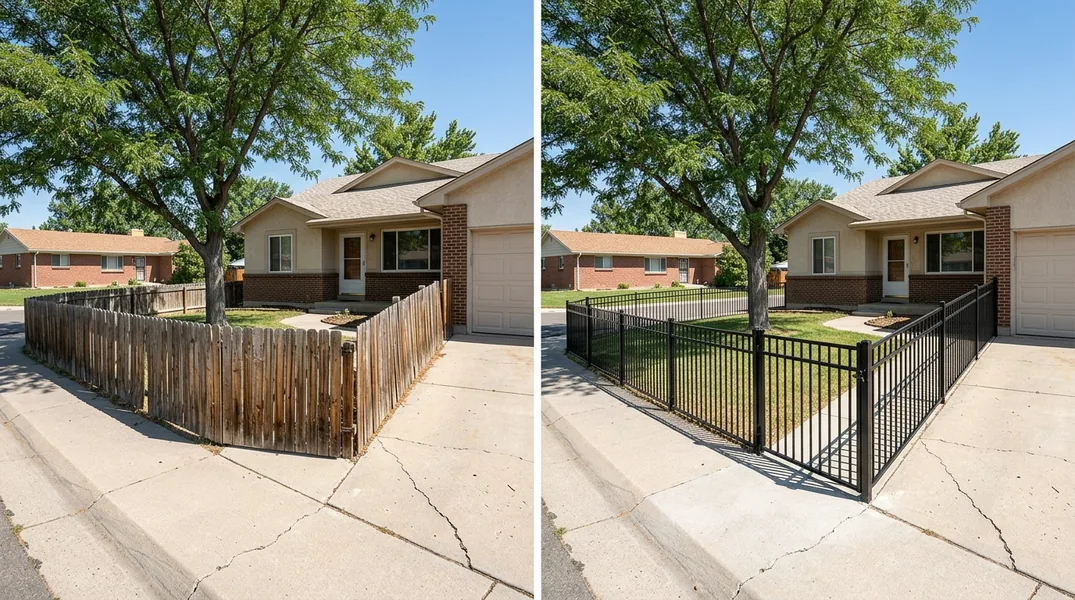
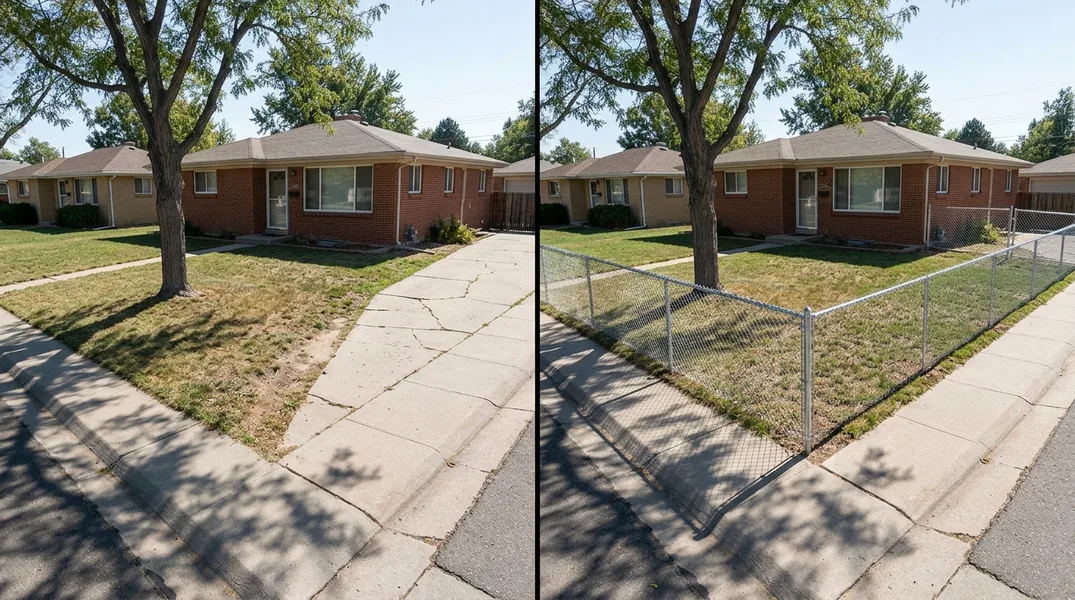
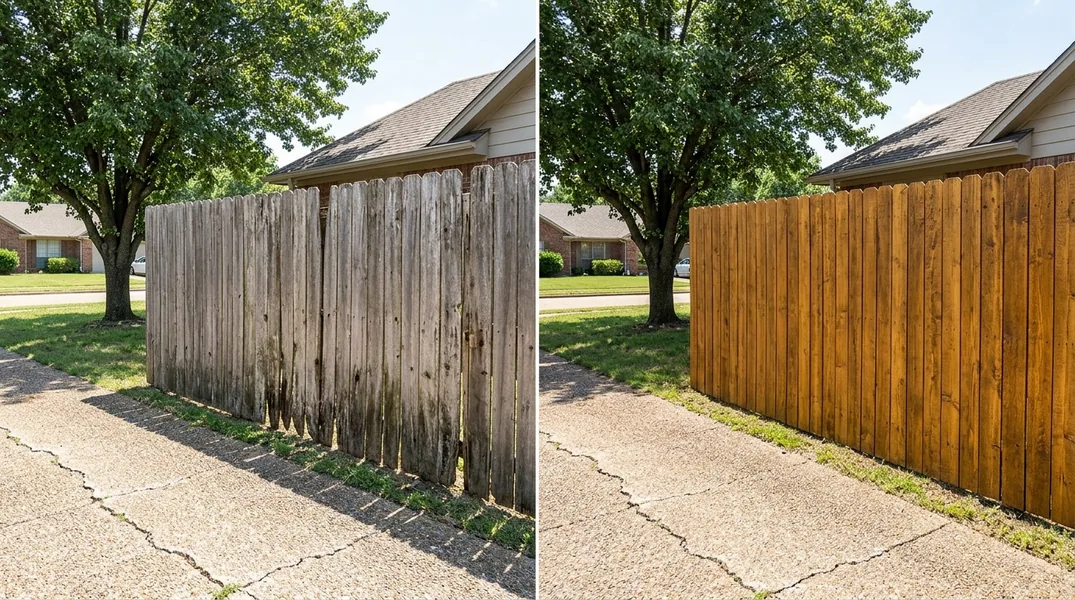
The material you choose shapes how much time and money your fence will need over its life. Cedar is beautiful and weathers to a soft gray, but it demands attention. Under this sun and humidity, cedar wants cleaning and re-staining every two to three years to stay protected. Do that, and a cedar fence can last fifteen to twenty years. Skip it, and you are looking at ten. Pressure-treated pine is the budget-conscious choice. It is less attractive than cedar but more durable without staining, and it performs well for the cost. Vinyl and PVC require almost no maintenance once installed, and they do not rot or splinter, but they do not match the warmth of real wood, and they cost more upfront. Chain link is the toughest per dollar spent, especially in galvanized or powder-coated steel. Gauge and mesh size determine strength and appearance. Aluminum and ornamental iron suit front yards and pool areas, and they can be racked or stepped to follow grade without looking awkward. Each material has honest trade-offs, and the right choice depends on your budget, your maintenance tolerance, and what you want the fence to do.
Pricing is by the linear foot and quoted on site, because slope, existing structures, access for equipment, tear-out of old fencing, and gate count all change the actual scope. Visit our pricing page for an overview, and request a free estimate to get a number specific to your property. We provide estimates for wood and privacy fence, vinyl fencing, chain link, and aluminum and ornamental iron installations.
Permits, HOA Rules, Property Lines & Pool Barriers
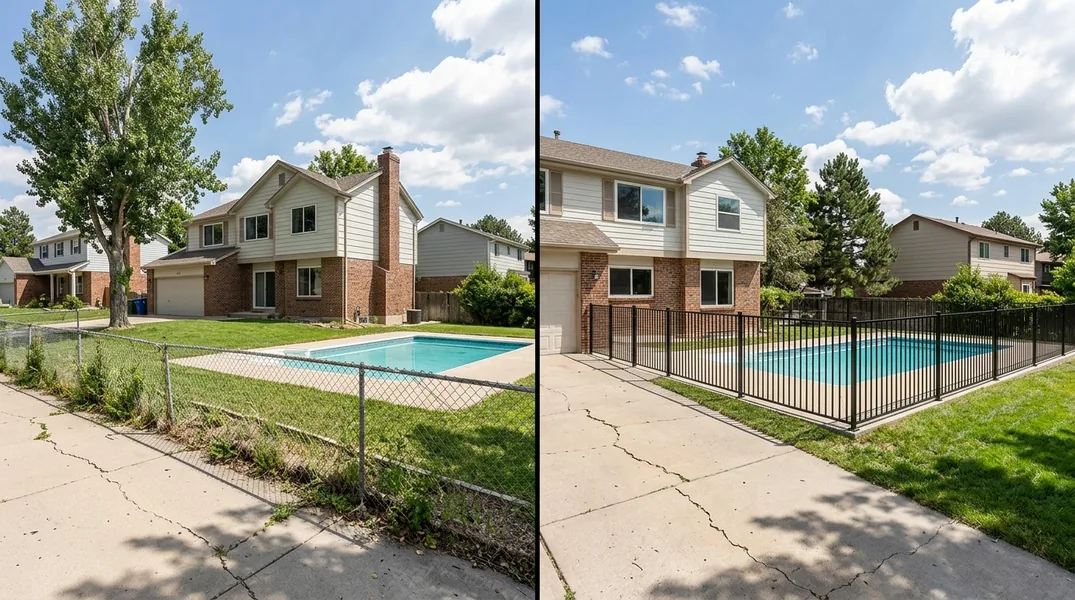
Fence permits, height limits, and material restrictions vary by jurisdiction. In most jurisdictions across the Denver area, residential fences have a maximum height, typically eight feet in back yards and four to six feet in front, though requirements vary by city and county. Many cities require a permit before installation begins. If your property is in a master-planned community or is subject to deed restrictions, your HOA or architectural review board may govern fence height, material, and color, and approval may be required before work starts. It is worth checking your HOA documents and contacting your local building department before you commit to a design. On property lines, we install on the line you identify, working from your existing survey or plat. Determining a boundary is the work of a licensed land surveyor. If there is any uncertainty about where your property line lies or if your neighbor has concerns, confirming the line and any shared responsibility in writing beforehand will prevent disputes later. Pool barriers are subject to state and local codes and must be installed with self-closing, self-latching hardware. We install pool fencing to meet the local pool barrier codes that apply at your address. Final determination of compliance rests with the local building official, and no barrier replaces supervision. Before we dig post holes, we request Colorado 811 utility locates to identify underground lines from participating operators. Note that locates do not mark private lines such as irrigation systems or landscape lighting, so tell us about any private lines on your property.
Requirements vary by jurisdiction, and rules change. Always verify with the Denver building department and your HOA before starting your project. Call Denver Fence Contractors with questions about your site, and we will help you understand what your property needs.
Ready to get started? Denver Fence Contractors serves in Denver and surrounding areas. Book your free on-site estimate today.
Get Your Free Estimate