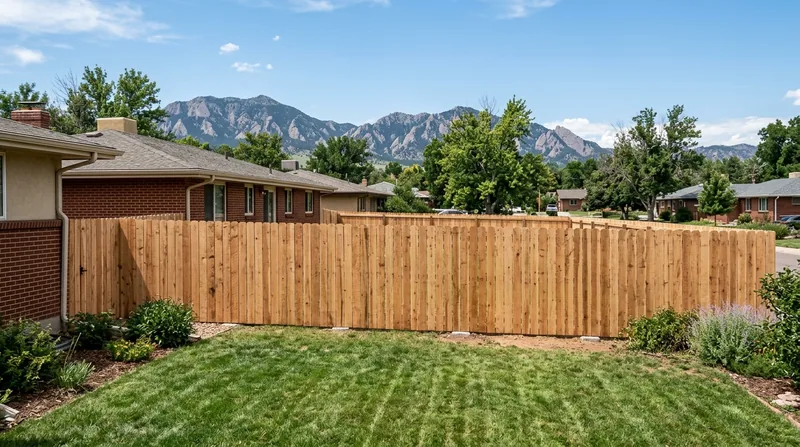




A privacy fence installation in Denver means choosing between cedar and pressure-treated pine, setting posts deep enough to hold through spring thaw, and sealing every board before the dry Front Range air checks and splits the wood. Denver's high altitude and intense sun accelerate weathering, so the species you pick and how you prep it matter more than they do in lower, wetter climates. We install wood and privacy fences that stand straight and tight for years because we understand the local soil, exposure, and the craft that keeps a fence from racking or leaning after the first season. Whether you need a 6-foot privacy screen between neighbors, a cedar fence that ages to silver-gray, or a board-on-board design that looks finished on both sides, we build it to code, to your property line, and to last. Call us at (720) 573-2902 for a free estimate, or read on to understand what goes into a solid fence installation in Greater Denver.
Why Wood and Privacy Fencing Matters in Denver
Denver's dry climate and intense UV exposure demand wood species and sealing methods that most contractors cut corners on. A fence built with unsealed boards will check and split within a year. Posts set shallow or in loose soil shift with freeze-thaw cycles and spring moisture. We set every post below the frost line in concrete, use kiln-dried cedar or pressure-treated pine, and seal every board before installation so that your fence resists the Front Range weather that breaks careless work.
- We select species based on your budget and how long you want the fence to stand without major repair.
- Posts are set in concrete at proper depth to prevent heaving and settling as ground conditions change.
- Every board is sealed before it goes up, so weathering happens slowly and evenly across the entire fence.
- We build to Denver building code and setback rules, and we work from your existing survey or the line you identify.
- Board-on-board, side-by-side, and lap designs are all available, each with its own cost and appearance.
A well-built privacy fence defines your property, screens wind and noise, and gives you years of solid service before repair or replacement enters the picture.
Key info: Denver's building code requires fence setbacks from property lines and height limits that vary by neighborhood and zoning. Check with Denver's Community Planning and Development office or your local city building department before ordering materials. HOA rules in master-planned communities often restrict fence height, material, and color, so verify those rules with your HOA before we start.
How We Install Wood and Privacy Fences in Denver: Our Process
Every fence installation follows the same disciplined sequence: we call 811 for utility locates, mark the fence line with you, set posts at the right depth and spacing, build frames with properly sized rails and stringers, and then install and seal boards. We work from existing surveys or the line you identify, and we handle all the details that separate a fence that lasts from one that starts to fail in year two.
- We schedule a Colorado 811 utility locate to mark buried gas, electric, water, and communications lines before any digging begins.
- We walk the fence line with you, confirm the boundary and any setback rules, and discuss height, style, and wood species.
- We excavate post holes at proper spacing (typically 6 feet on center) and set posts in concrete below the frost line.
- We build horizontal frame members (rails and stringers) that are sized and braced to prevent sagging or racking over time.
- We install pickets or boards, seal every face and edge, and finish with cap and trim pieces where the design calls for them.
- We clean up all debris and haul away scrap wood and cardboard.
The result is a fence that stands plumb, holds its line, and weathers evenly. If you already have a fence that needs repair, we also offer fence repair and post repair and replacement so you can decide whether to fix or rebuild.
Local example: A homeowner in Lakewood needed a 6-foot cedar privacy fence along the back property line. We pulled the permit with the city, located utilities, set posts 30 inches deep in concrete, and installed 1x6 kiln-dried cedar boards sealed on all four sides. The fence was built and sealed in 3 days. Two years later, it has aged to a natural silver-gray and shows no signs of checking, splitting, or racking.
Wood and Privacy Fence Installation Methods: Comparing Your Options
| Approach | Description | Best for |
|---|---|---|
| Cedar picket or board fence | Kiln-dried western red cedar, sealed on all sides, natural color or stain, ages to silver-gray if left unsealed. | Homeowners who want appearance and durability, and who will maintain stain or seal every 3 to 5 years. |
| Pressure-treated pine fence | Chemically treated softwood, sealed before installation, lower cost than cedar, holds up well under Denver weather when sealed and maintained. | Budget-conscious homeowners and those who want a solid privacy screen without premium material cost. |
| Board-on-board (shadow box) design | Boards overlap on alternating sides, creating a finished appearance from both sides and allowing slight air flow to reduce wind load. | Properties where both sides of the fence are visible, or where you want a contemporary look and wind resistance. |
| Side-by-side (solid privacy) design | Boards installed flush against each other with no gaps, maximum privacy and wind blocking, pickets or boards run the full height. | Maximum privacy screening, noise reduction, and wind protection on exposed lots or where neighbors are close. |
| Racked or stepped installation | Fence follows sloped terrain by tilting boards perpendicular to slope (racked) or stepping the fence line (stepped) to maintain vertical pickets. | Properties with significant grade change, where a level fence line is not possible or where aesthetics demand vertical boards. |
Each method has a cost and an appearance trade-off. We help you weigh the options based on your property, budget, and how long you plan to own the home.
Wood and Privacy Fence Installation Cost in Denver: What to Expect
A privacy fence installation in Denver typically starts at $32 per linear foot for pressure-treated pine, and rises to $45 to $60 per linear foot for cedar with premium sealing and finishing. The total cost for a typical residential project (100 to 150 linear feet) ranges from $3,200 to $9,000 depending on species, design, site access, and whether the ground is level or sloped. Getting 2 or 3 estimates from local contractors is always smart, because site conditions, wood quality, and labor rates vary.
Factors that move the cost up or down include:
- Wood species and grade: cedar costs more than pressure-treated pine, and premium grades cost more than standard.
- Height and design: a 6-foot side-by-side fence costs more than a 4-foot picket fence, and board-on-board costs more than single-sided.
- Site access and terrain: difficult access, steep slopes, or existing obstacles (trees, structures, utilities) add labor and may require special equipment.
- Sealing and finishing: full sealing on all four sides of every board before installation costs more than single-face sealing, but it extends fence life dramatically.
- Permit and utility locate fees: Denver and surrounding cities may charge permit fees, and 811 locates are free but required by law.
The best way to get an accurate number is to call us for a free estimate. We'll walk your property, discuss your goals and budget, and give you a detailed price based on exactly what you need. Visit our pricing page for more detail on how costs break down by service and material.
Wood and Privacy Fence Installation Near Me: What Denver Homeowners Should Know When Hiring
Hiring the right contractor means checking three things: insurance, references, and a clear understanding of permits and HOA rules in your neighborhood. Colorado has no state contractor license for fence installation, so licensing is set by the city where the work happens. Denver issues contractor licenses through its Community Planning and Development office, and other cities in Greater Denver (Aurora, Lakewood, Thornton, Broomfield, and others) set their own rules. Always verify permit requirements with your local building department before you start, and if you live in a master-planned community, confirm HOA architectural approval before ordering materials.
- Confirm that the contractor carries general liability and workers' compensation insurance, and ask for a certificate of insurance before work begins.
- Check references from recent fence installations in your city or neighborhood, and ask those homeowners how the fence has held up.
- Ask whether a permit is required in your jurisdiction, and whether the contractor will handle the permit application and fees.
- If you have an HOA, submit fence plans for approval before hiring, so you avoid installing a fence that violates your architectural guidelines.
- Understand that a licensed land surveyor is the only person who can determine a property boundary if there is any doubt about the fence line.
- Confirm that the contractor will call 811 for utility locates before digging any post holes, as required by Colorado law.
We are fully insured with a certificate of insurance available on request. We have been installing fences in Denver and surrounding areas since 2013, and we are an AFA Member Installer with the American Fence Association. When you call us at (720) 573-2902, we listen to what you need, walk your property, and give you honest guidance on repair versus replacement, material choices, and cost. Contact us for a free estimate with no obligation to book.
Wood & Privacy Fence Installation in Denver: Pricing Guide
| Service | Price | Details |
|---|---|---|
| Pressure-treated pine privacy fence | Starting at $32/ft | Includes posts set in concrete, sealed boards, standard 6-foot height, level terrain, and cleanup. |
| Cedar privacy fence | Starting at $45/ft | Kiln-dried cedar sealed on all four sides, posts set in concrete, premium appearance and durability. |
| Board-on-board or specialty design | Starting at $50/ft | Overlapping boards, finished appearance from both sides, higher labor cost than single-sided installation. |
| Sloped or racked installation | On estimate | Terrain changes, difficult access, or existing obstacles require site visit to price accurately and safely. |
| Permit and utility locate | Varies by city | Denver and surrounding cities set their own permit fees; 811 locate is free and required by Colorado law. |
| Free estimate | No charge | Response within 24 hours at (720) 573-2902, includes site walk and detailed price breakdown. |
Indicative pricing, the exact cost depends on square footage, finish, and site access. Free personalized estimate within 24h at (720) 573-2902.


