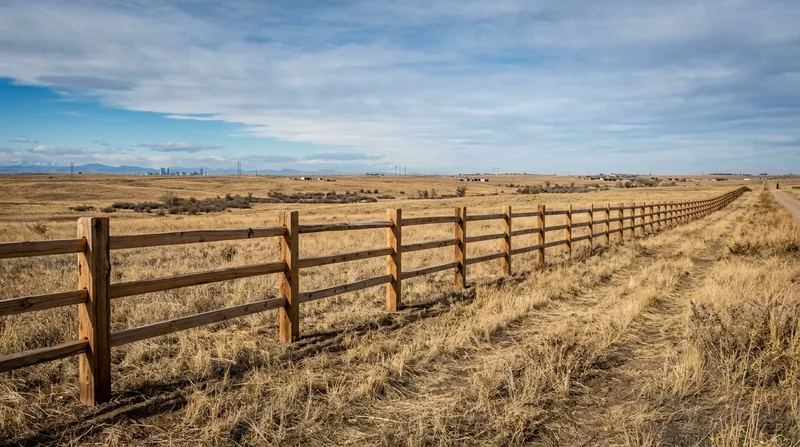




Denver's open eastern plains and ranch properties demand farm fence installation built to withstand wind, clay soils, and the wear of working land. Whether you're securing pasture, containing livestock, or marking property lines across acreage, the fence must be set deep, braced for exposure, and built from materials that handle the elements. We've installed ranch fencing on Denver's east side and throughout the metro area since 2013, setting posts below the frost line and running wood rail, pipe, and wire fencing across properties where standard residential fencing won't hold.
Why Ranch Fencing Matters on Denver Acreage
Open lots and pasture land require a different approach than backyard privacy fencing. Wind loads are higher, post spacing must account for longer spans, and the ground itself presents challenges. Clay soil, drainage patterns, and exposure mean posts must be set in concrete below the frost line to prevent heave and settling. A ranch fence is a working fence, not a decorative one, and it needs to hold for years without constant repair.
- Set posts in concrete below frost depth to prevent heave and movement over winter and spring thaw cycles.
- Space posts 8 to 10 feet apart for rail fencing, or closer for wire, depending on span and load.
- Use pressure-treated wood, galvanized steel, or powder-coated pipe to resist weathering and corrosion in open terrain.
- Brace longer spans with anti-sag hardware and diagonal bracing to keep the fence plumb under wind and animal pressure.
- Run wire or rail horizontally, ensuring proper tension and attachment so the fence functions as intended for decades.
A well-built ranch fence holds its line, resists weather, and requires minimal maintenance once installed correctly.
Local example: Properties in Littleton, Parker, and Brighton often run 5 to 20 acres with pasture or open space. Wind exposure is significant, and clay ground is common across the metro area. Posts must be set deep and braced properly to prevent sagging over the first few years.
Before you plan your fence, check with your local building department and any HOA or deed restrictions that may apply. The City and County of Denver's Community Planning and Development office publishes fence height, setback, and material rules that vary across jurisdictions in the metro area.
How We Install Ranch Fencing Across Denver Properties
Installation starts with understanding your property line, marking utility locations, and assessing the terrain. We work from your existing survey and install on the line you identify. Colorado 811 utility locates are required by law before we dig any post holes, and we handle that call. From there, we set posts, run rails or wire, and brace the fence to hold steady under load and weather.
- Call Colorado 811 or request an online utility locate to mark underground lines before digging begins.
- Mark the fence line using your property survey and confirm corner points and setbacks with you.
- Dig post holes to depth, set posts in concrete, and allow concrete to cure before running rails or wire.
- Run horizontal members (rails or wire) with proper spacing and tension, using galvanized or powder-coated fasteners.
- Install bracing and hardware to prevent sag and movement, especially on longer spans or exposed terrain.
- Walk the completed fence line and verify plumb, tension, and function before final inspection.
The timeline depends on acreage, terrain, and material choice. A half-mile of split rail or pipe fencing typically takes 3 to 5 working days. We coordinate around your schedule and weather.
Real scenario: A 10-acre property in Highlands Ranch with a 600-foot fence line and clay ground required posts set 4 feet deep in concrete, spaced 10 feet apart with 2x4 rails and diagonal bracing. Total time was 4 days. The fence has held plumb and straight for over a year with zero adjustment needed.
We also handle fence post repair and replacement when an existing fence shows settling or rot, so you can extend the life of what you have before committing to a full rebuild.
Ranch Fencing Methods and Material Options
| Approach | Description | Best for |
|---|---|---|
| Split Rail | Pressure-treated 4x4 posts with 2x4 or 2x6 rails mortised or bolted horizontally. Classic ranch look, open design allows sight lines and airflow. | Pasture, property marking, estates where aesthetics and function matter equally. |
| Pipe Fence | Galvanized or powder-coated steel pipe (1.5 to 2.5 inch) set in concrete with horizontal pipe rails. Extremely durable, minimal maintenance, strong under load. | Horse containment, high-wind areas, long-term durability where rust and rot are concerns. |
| No-Climb Horse Fence | Welded wire mesh in 2x4 inch openings, typically 4 to 5 feet tall, mounted on wood or pipe posts. Prevents horses from getting hooves caught and climbing. | Horse pastures and paddocks where safety and containment are primary concerns. |
| Barbed Wire | Galvanized barbed wire strung between posts with proper tension and spacing. Low cost, effective for cattle and large livestock, requires maintenance. | Cattle operations, large open acreage, budget-conscious applications where aesthetics are secondary. |
| Post and Wire Combination | Sturdy posts with horizontal wire (smooth or barbed) strung between them. Flexible, cost-effective, allows for future modifications. | Mixed livestock, temporary or semi-permanent boundaries, properties where flexibility matters. |
Each approach has trade-offs in cost, durability, maintenance, and function. We recommend the material that matches your livestock type, terrain, wind exposure, and long-term goals.
Farm & Ranch Fencing Cost in Denver: What to Expect
Farm fence installation pricing depends on material, post depth, terrain, and acreage. Split rail and wood rail fencing typically start around $14 per linear foot for materials and labor, but longer runs and difficult terrain can shift that number. Pipe fencing runs higher due to material cost and the skill required to set and brace it. Barbed wire and post-and-wire combinations are the most economical, while no-climb horse fencing sits in the mid-range.
Several factors move the cost up or down. Longer runs with minimal obstacles cost less per foot than short, complex boundaries. Clay soil that requires deeper post holes or extra bracing adds labor. If we're working around trees, wet ground, or steep terrain, the job takes longer. Material choice is the biggest lever: pressure-treated wood is cheaper than galvanized pipe, and pipe is more durable but carries a higher upfront cost.
We recommend getting 2 or 3 estimates before committing. Each contractor may interpret terrain and depth requirements differently, and a detailed estimate will show you exactly what you're paying for. Once we visit your property, we can give you a firm price based on actual conditions, not guesswork.
For a full breakdown of pricing across all our services, visit our pricing page. Call us at (720) 573-2902 for a free, no-obligation estimate on your ranch fencing project.
Hiring a Ranch Fencing Contractor Near Me: What Denver Homeowners Should Know
When you're planning a large fencing project on acreage, the contractor you choose matters. Look for someone who understands local soil and weather, who sets posts correctly, and who can explain why they're recommending a specific approach. Insurance and workers' compensation cover are essential. Licensing for fence installation in Colorado is set by individual cities and counties, not the state, so requirements vary across the Denver metro area. Always confirm what your local building department requires before you hire, and ask your contractor how they handle permits.
Get multiple estimates so you understand the range of approaches and costs. Check references from past customers with similar acreage or livestock. Ask about warranty and what happens if a post settles or a rail cracks. Request a certificate of insurance and verify coverage. We are fully insured with general liability and workers' compensation cover, and we can provide a certificate of insurance on request.
If your property is in a master-planned community or has an HOA, confirm fence height, material, and color rules before we start. Many deed restrictions govern what you can build on your own land. We work with you to understand those limits and find a solution that meets both the rules and your needs.
Ready to move forward? Contact us for a free estimate. We respond within 24 hours at (720) 573-2902.
Farm & Ranch Fencing in Denver: Pricing Guide
| Service | Price | Details |
|---|---|---|
| Split Rail Fencing | Starting at $14/ft | Pressure-treated posts and rails, standard spacing, includes post holes and concrete set |
| Pipe Fencing | Starting at $18/ft | Galvanized or powder-coated steel pipe, higher durability, labor-intensive installation with bracing |
| No-Climb Horse Fence | Starting at $12/ft | Welded mesh on posts, safety-rated for equine containment, includes horizontal rails and fasteners |
| Barbed Wire or Post-and-Wire | Starting at $8/ft | Budget option for cattle and large livestock, minimal materials, labor-efficient installation |
| Difficult Terrain or Extra Bracing | On estimate | Clay soil, steep slopes, wind exposure, or longer spans require on-site assessment before pricing |
| Free Estimate | No charge | Response within 24 hours at (720) 573-2902, includes site visit and material recommendations |
Indicative pricing, the exact cost depends on square footage, finish, and site access. Free personalized estimate within 24h at (720) 573-2902.


