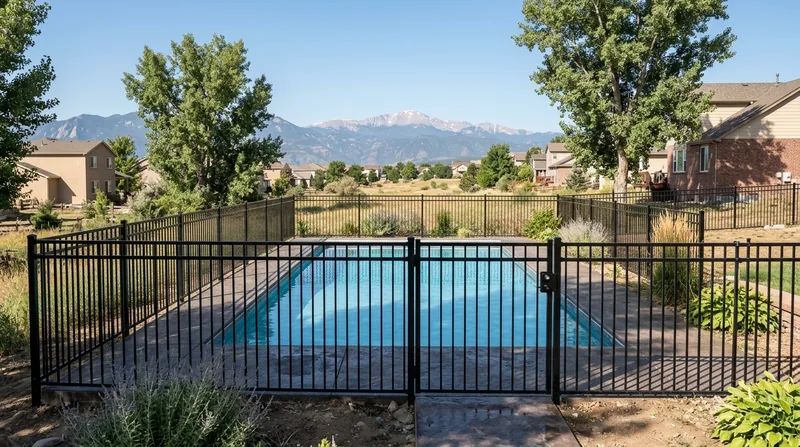




Pool fence installation in Denver is not a decorative choice, it's a legal requirement when you have a swimming pool. Colorado state law and Denver municipal code set strict barrier standards to keep children safe around water. We install pool fencing that meets those codes while working with your site's specific layout, soil conditions, and access. Whether you need a new fence around a newly installed pool or you're upgrading an existing barrier, we handle the posts, gates, and hardware to code. As an AFA Member Installer with over a decade of experience in the Denver area, we know exactly what the inspectors will check and what will pass on the first visit.
Why Pool Fence Safety Standards Matter in Denver
Pool barrier codes exist because drowning is a leading cause of unintentional injury in children. Denver and surrounding communities enforce these standards through building permits and annual pool inspections. A compliant pool fence is your first line of defense and the only way to satisfy local code officials before they sign off on your pool permit. The rules cover post depth, gate latch height, gap spacing between pickets or mesh, and self-closing hardware on all entry gates.
- Posts must be set below the local frost line to prevent heave and maintain structural integrity year-round.
- Gaps between vertical members cannot exceed 4 inches, which prevents a child's head from becoming trapped.
- Self-closing, self-latching gates must latch at a height of 54 inches or higher from the ground.
- The barrier must be at least 48 inches tall and completely surround the pool water on all sides.
- Removable pool fence sections must be installed and removed consistently to remain compliant.
These requirements apply whether you choose wood, vinyl, chain link, or aluminum mesh fencing. We install to meet local pool barrier codes, with final determination resting with the authority having jurisdiction. Before you begin any pool project, check with the Denver Community Planning and Development office to confirm the exact code version that applies at your address, because requirements can vary across Greater Denver jurisdictions.
Key info: In Westminster and Thornton, pool fence height and setback rules may differ from Denver proper. Always pull your site-specific code before ordering materials. We work from your site survey and local code requirements to design a fence that passes inspection.
How We Install Pool Fencing in Denver: Step by Step
Pool fence installation begins with a site visit to confirm pool location, property lines, and access for equipment. We verify the local code requirements and HOA restrictions if your home is in a master-planned community. Once you approve the design and material choice, we call Colorado 811 to locate underground utilities before we dig any post holes. This step is required by law and prevents damage to electrical, gas, and water lines.
- Schedule a free on-site estimate by calling (720) 573-2902 to review your pool layout and code requirements.
- We confirm the fence line with you and verify setback and height rules that apply at your address.
- Colorado 811 utility locates are requested and marked before any digging begins.
- Posts are dug to below the local frost line and set in concrete to prevent movement and heave.
- Rails, pickets, or mesh panels are attached, and gaps are measured to ensure code compliance.
- Self-closing, self-latching gates are installed and tested to verify proper latch height and operation.
- Final inspection and walk-through confirm the fence is safe, secure, and ready for pool use.
The entire process typically takes one to three weeks from estimate to completion, depending on fence length, material choice, and weather. If you need gate installation or repair as part of your pool project, we handle that in the same visit.
Local example: A typical residential pool in Lakewood or Englewood requires 120 to 180 linear feet of fencing. We often use aluminum mesh or vinyl picket for pool enclosures because both materials are durable, low-maintenance, and easy to inspect for damage. Post spacing is held at 6 feet on center for strength, and all hardware is stainless steel or powder-coated to resist corrosion.
Pool Fence Materials: Which Option Works Best for Your Denver Home
| Material | Description | Best for |
|---|---|---|
| Aluminum Mesh | Lightweight, powder-coated aluminum frame with taut mesh screening. Removable or permanent installation. Transparent view of the pool area. | Homeowners who want visibility, easy inspection, and minimal maintenance. Removable mesh systems allow seasonal storage. |
| Vinyl Picket | White or tan vinyl boards mounted on aluminum or vinyl rails. No painting needed. Rigid and long-lasting. Gaps are easily measured and maintained. | Permanent pool barriers in residential settings. Families who prefer a finished aesthetic and do not want to repaint every few years. |
| Wood Picket | Pressure-treated pine or cedar boards. Can be stained or painted. Requires periodic maintenance to prevent rot at the ground line. Warm, traditional appearance. | Homeowners who want a classic look and are willing to stain or repaint every 3 to 5 years. Best in low-moisture environments. |
| Chain Link | Galvanized or vinyl-coated steel mesh on steel posts. Durable and affordable. Requires periodic inspection for rust and sagging. Provides clear sightlines. | Budget-conscious homeowners and rental properties. Pools in high-traffic areas where durability and visibility are priorities. |
Each material has different labor and material costs. Aluminum mesh and vinyl picket are popular in Denver because they resist weathering and require little upkeep. We can discuss the trade-offs during your free estimate and help you choose the material that fits your budget and maintenance preferences.
Pool Fence Installation Cost in Denver: What to Expect
Pool fence installation in Denver typically starts at $39 per linear foot for basic chain link or aluminum mesh on standard sites with good access. Vinyl picket and wood picket fences run higher, usually $50 to $80 per linear foot depending on material grade and finish. A typical residential pool requiring 150 linear feet of fencing can range from $5,850 to $12,000 installed, including posts set in concrete, gates, hardware, and labor.
Several factors affect the final price. Difficult site access, sloped or uneven terrain, rocky soil that requires more excavation, and proximity to existing structures or utilities can increase labor time and cost. Gate installation adds $400 to $800 per gate depending on size and hardware. If your pool already has a fence that needs repair or upgrading, we assess whether patching specific sections is more cost-effective than full replacement.
The best way to know your actual cost is to request a free, no-obligation estimate. We visit your property, measure the fence line, confirm code requirements, and provide a detailed quote within 24 hours. You can then compare estimates from other contractors to make an informed decision. Visit our full pricing overview to see typical costs for different materials and project sizes across our service area.
What to Look for When Hiring a Pool Fence Installer Near Me in Denver
Choosing the right fence contractor is as important as choosing the right material. Start by verifying that the company is fully insured with general liability and workers' compensation coverage. Ask for a certificate of insurance and confirm that coverage remains active throughout your project. In Colorado, fence installation does not require a state contractor license, but Denver and other local jurisdictions may have specific requirements, always check with your city or county building department before hiring.
Request at least two or three estimates so you can compare price, materials, timeline, and the contractor's familiarity with local pool codes. Ask each contractor whether they have experience with pool barrier installations and whether they understand the specific code version that applies in your jurisdiction. Check references from recent pool fence projects and ask those homeowners whether the fence passed inspection on the first attempt.
If your home is in a master-planned community or HOA, confirm that the contractor understands height, material, and color restrictions before work begins. Finally, verify that the contractor will handle the Colorado 811 utility locate call and will not begin digging until utilities are marked. Ready to move forward? Contact us today for a free pool fence estimate. Call (720) 573-2902 or fill out our online form, and we will schedule a site visit within 24 hours.
Pool Fence Installation in Denver: Pricing Guide
| Service | Price | Details |
|---|---|---|
| Aluminum Mesh Pool Fence | Starting at $39/ft | Posts set in concrete, mesh panels, self-closing gate, basic hardware, labor included |
| Vinyl Picket Pool Fence | Starting at $55/ft | Pressure-treated or vinyl rails, pickets spaced to code, aluminum posts, self-closing latch gate |
| Chain Link Pool Fence | Starting at $35/ft | Galvanized steel posts and mesh, tension bands, self-closing gate, concrete footings, basic hardware |
| Wood Picket Pool Fence | Starting at $50/ft | Pressure-treated pine or cedar, rails, pickets, concrete-set posts, gate, stain or paint optional |
| Gate Installation (per gate) | $400 to $800 | Includes hardware, self-closing latch mechanism, hinges, frame, labor, and code-compliant height setup |
| Estimate | Free | Site visit, code review, material options, timeline, and detailed quote within 24 hours |
Indicative pricing, the exact cost depends on square footage, finish, and site access. Free personalized estimate within 24h at (720) 573-2902.


