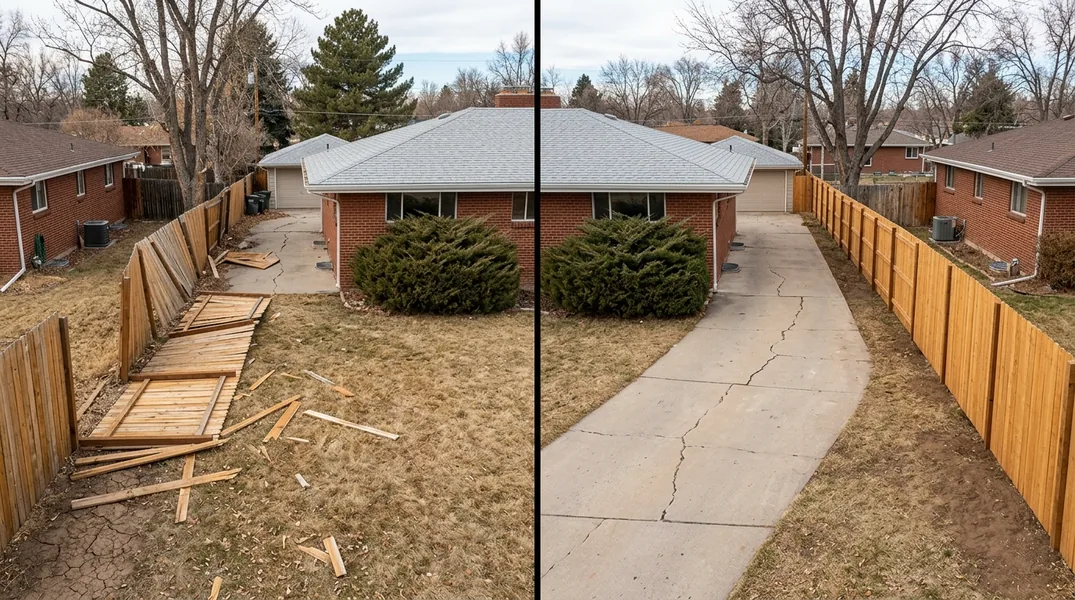
Understanding Corner-Lot Fencing Challenges in Aurora and Thornton
Corner-lot homes in 1990s subdivisions across Aurora and Thornton present unique fencing challenges that many homeowners don't anticipate until they're ready to install their first fence. Unlike interior lots that have clear property boundaries on two sides, corner properties expose your yard to two public streets, creating visibility, privacy, and legal considerations that require careful planning. The subdivisions built during the 1990s often have specific deed restrictions and setback requirements that differ from modern developments, which means your fencing options may be more limited than you'd expect.
The primary challenge with corner-lot fencing is determining exactly where your property line runs and what type of fence you're legally permitted to install. Many homeowners assume they can fence their entire perimeter, but setback requirements from street frontage often prevent this. In Denver and surrounding communities, municipalities typically require fences to be set back a certain distance from the street right-of-way, which can significantly reduce the fencing area available on corner properties. Understanding these regulations before you commit to any installation plan will save you time, money, and potential legal headaches with your municipality or neighbors.
Who Pays for Fence Between Neighbors: Legal and Practical Considerations
One of the most common questions we hear from corner-lot homeowners is who pays for a fence between neighbors, and the answer depends on several factors including local law, property agreements, and whether the fence is considered a boundary fence or a privacy fence. In Colorado, there is no automatic legal obligation for a neighbor to share the cost of a boundary fence unless you have a written agreement or a shared fence already exists. This means that if you want to install a new fence on or near the property line, you typically bear the full cost unless your neighbor voluntarily agrees to contribute. However, if a fence already exists on the property line and your neighbor benefits from it, they may have a legal obligation to contribute to maintenance and repair costs.
The concept of a 'good neighbor fence' has become standard practice in many subdivisions, where neighbors split the cost of a fence that serves both properties. Before you assume your neighbor will contribute, have a direct conversation with them about the project. Many disputes arise simply because homeowners didn't discuss expectations upfront. If your neighbor agrees to share costs, get the agreement in writing. This protects both parties and clarifies who is responsible for what portion of installation, maintenance, and future repairs. Denver Fence Contractors recommends having this conversation early in your planning process, ideally before you request a free estimate so you can present your neighbor with accurate information about the project scope and budget.
Fence on Property Line: Navigating Setback Requirements and Deed Restrictions
Understanding where you can legally place a fence on property line is essential for corner-lot owners in 1990s subdivisions. Most municipalities, including those serving Aurora and Thornton, have specific setback requirements that prevent fences from being placed directly on the street-facing property line. These setbacks typically range from 5 to 25 feet depending on the zoning classification and the specific subdivision's covenants, conditions, and restrictions (CC&Rs). Before you dig a single post hole, you need to obtain a property survey or review your subdivision's recorded plat to understand exactly where your property lines run and what setbacks apply to your corner lot.
The deed restrictions in 1990s subdivisions were often quite strict, and many included provisions about fence height, material, and placement that remain enforceable today. Some subdivisions prohibit solid fences on street-facing sides, requiring Aluminum & Ornamental Iron Fencing or open designs instead to maintain neighborhood aesthetics. Others may limit fence height to 4 feet on front-facing sides while allowing 6-foot privacy fences in back yards. Violating these restrictions can result in fines from your homeowners association or, in some cases, a legal requirement to remove the fence entirely. Before committing to any fencing project, review your property deed, CC&Rs, and local municipal code, or contact Denver Fence Contractors for guidance on what's permitted in your specific location.
Neighbor Fence Law in Colorado: What Every Corner-Lot Owner Should Know
Colorado's neighbor fence law is relatively straightforward but often misunderstood by homeowners planning their first fence installation. The state does not impose a general duty on neighbors to share the cost of boundary fences, and there is no automatic right to force a neighbor to erect a fence on the property line. However, Colorado does recognize the concept of 'adverse possession' and 'prescriptive easements,' which means that if a fence has existed on or near a property line for a certain period (typically 18 years in Colorado), it may become legally binding regardless of the original property lines. This is why understanding your actual property lines through a professional survey is so important, especially if there's already a fence on your property.
Additionally, Colorado law holds property owners responsible for maintaining fences that enclose livestock or that were erected with the neighbor's knowledge and benefit. If you install a fence that your neighbor clearly benefits from (such as privacy from a busy street), they may have a legal claim to contribute to its cost or to require you to maintain it. Local municipal codes in Aurora, Thornton, and Denver add another layer of regulation, often requiring permits for new fence installations and specifying maximum heights, materials, and setbacks. The best approach is to understand your local neighbor fence law by reviewing your municipal code or consulting with a local fence contractor who understands the regulations in your specific area. Denver Fence Contractors can help you navigate these legal considerations as part of your project planning.
Wood & Privacy Fence Installation Near Me: When Professional Help Makes Sense
For corner-lot homeowners in Aurora and Thornton looking to install a privacy fence, working with a professional contractor makes a significant difference, especially when navigating the complexities of property lines, setbacks, and neighbor agreements. Wood & Privacy Fence Installation requires precision in layout, proper post placement for longevity, and adherence to local codes. Many homeowners attempt DIY installations only to discover they've violated setback requirements or placed the fence in the wrong location, resulting in costly removal and reinstallation. A professional contractor will verify property lines, confirm local regulations, and ensure your fence is built to last for decades.
When you're ready to move forward with your corner-lot fencing project, the first step is to schedule a consultation with a fence contractor who understands the specific challenges of 1990s subdivisions in your area. Denver Fence Contractors serves homeowners throughout the region and can provide expert guidance on material options, design choices, and the legal landscape specific to your property. Whether you're considering Wood & Privacy Fence Installation, Vinyl & PVC Fence Installation, or Chain Link Fence Installation, a professional assessment will clarify your options and help you avoid costly mistakes. Contact Denver Fence Contractors today at (720) 573-2902 to discuss your corner-lot fencing needs and get a free estimate for your project.
Wood & Privacy Fence Installation Cost in Denver: What to Budget for Corner Lots
The pricing for corner-lot fencing projects typically runs higher than standard interior-lot installations because of the additional linear footage and the complexity of navigating multiple property lines and setback requirements. For Wood & Privacy Fence Installation, you should budget between $25 and $50 per linear foot for materials and labor, depending on the wood species, fence height, and site conditions. Corner lots often require 100 to 150 linear feet of fencing or more, which can result in total project costs ranging from $2,500 to $7,500 or higher. Additional costs may include property surveys, permit fees, and removal of existing structures, all of which should be factored into your budget before you commit to the project.
To get an accurate picture of what your specific corner-lot fencing project will cost, request a detailed free estimate from Denver Fence Contractors that includes all potential expenses. Many homeowners find that investing in a professional survey upfront, typically costing $300 to $800, saves them thousands of dollars by preventing costly installation mistakes or legal disputes with neighbors. When comparing quotes from different contractors, make sure each estimate includes site preparation, post installation, materials, labor, and any permit costs. Denver Fence Contractors can provide transparent pricing and help you understand what drives costs for your particular corner-lot project. Call (720) 573-2902 to discuss your budget and explore options that work for your financial situation.
Looking for a professional tree service in Denver? Denver Fence Contractors responds fast for all your fence needs.
Get a Free Quote