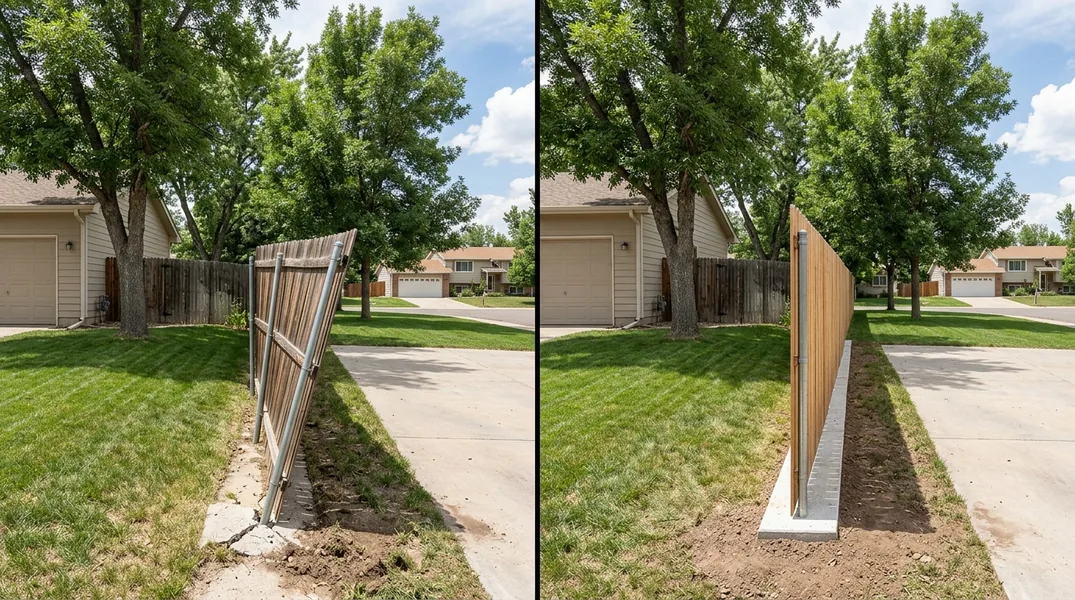
Understanding Denver's Bentonite Clay Problem
If you've driven through Denver and noticed fences that seem to lean or bow outward, you're witnessing one of the most common challenges homeowners face in this region: bentonite clay soil. This expansive clay is prevalent throughout the Denver metro area and poses unique challenges for fence installation that most homeowners don't anticipate until problems arise.
Bentonite clay has an unusual property: it expands significantly when wet and shrinks when dry. During Colorado's spring snowmelt and summer rains, this clay absorbs moisture and swells, creating tremendous upward and lateral pressure. When fall and winter arrive, the soil dries out and contracts, leaving voids and unstable ground. This constant cycle of expansion and contraction is relentless, and fence posts set directly into this soil will inevitably shift out of plumb, meaning they tilt away from vertical. Over time, even a well-built Wood & Privacy Fence Installation can develop gaps, lean, or structural damage that compromises both aesthetics and function.
How Bentonite Clay Pushes Posts Out of Plumb
The mechanics of why bentonite clay destabilizes fence posts are straightforward once you understand soil behavior. When a fence post is set in a hole filled with concrete and bentonite clay, the post is essentially anchored to a material that's constantly moving. In wet seasons, the clay expands around the post, exerting lateral pressure that can push the post sideways. Even a few millimeters of movement per year compounds over time, and after three to five years, a post that was perfectly plumb at installation may lean noticeably.
The problem worsens if the post hole isn't dug deep enough or if proper drainage isn't managed around the base. Professional fence contractors in Denver know that standard installation depths work fine in stable soils, but bentonite clay requires either deeper posts, specialized concrete mixes, or drainage solutions. Many DIY installations fail because homeowners don't account for this regional soil condition. The posts may look fine for the first year or two, but once the seasonal cycles take hold, the fence begins to fail. This is why choosing an experienced local contractor who understands Denver's soil conditions is essential for long-term fence stability.
Do I Need a Permit for a Fence in Denver?
Yes, you need a permit for most fence installations in Denver. This isn't just bureaucratic red tape; it's a requirement that protects property lines, ensures public safety, and confirms that your fence meets local codes. The City and County of Denver requires a fence permit for any fence over four feet in height, and many HOA communities require permits regardless of height. Failing to obtain a permit can result in fines, orders to remove the fence, or legal disputes with neighbors.
The permit process in Denver typically involves submitting site plans, property surveys, and specifications for your fence design and materials. The city reviews these documents to confirm that your fence complies with Denver's fence height regulations, setback requirements, and neighborhood guidelines. If your property is in an HOA community, you'll also need HOA approval before the city will issue a permit. This dual-approval process can seem complicated, but it ensures that your new fence won't violate covenants or codes. Most professional fence contractors handle the permit process on behalf of their clients, which streamlines the entire project and reduces delays.
Fence Height Regulations and HOA Approval in Denver
Denver's fence height regulations vary depending on location and zoning. In most residential zones, front-yard fences are limited to four feet in height, while side and back-yard fences can be up to six feet. However, these rules aren't universal across all neighborhoods, and some areas have stricter limits. Additionally, if your property is governed by an HOA, the HOA's covenants may impose stricter height limits or material restrictions than the city itself. An HOA-approved fence might be limited to five feet, or it might require specific materials, colors, or styles that complement the neighborhood aesthetic.
Before you invest in a Wood & Privacy Fence Installation or any other fence type, you must verify both the city's regulations and any HOA requirements. This is a critical first step that prevents costly mistakes. Many homeowners purchase materials and hire contractors only to discover mid-project that their fence violates HOA rules or exceeds city height limits. The result is either a costly redesign or removal of the fence. Denver Fence Contractors recommends reviewing your property deed, HOA documentation, and contacting the Denver Community Planning and Development department before finalizing your fence plans. A free estimate conversation with an experienced contractor can also clarify these requirements, as they navigate these regulations daily.
Fence Permit Cost in Denver: What to Budget
The fence permit cost in Denver typically ranges from $100 to $300, depending on the complexity of your project and the current city fee schedule. This is a relatively modest expense when compared to the overall cost of fence installation, but it's an essential line item in your budget. Some contractors include the permit fee in their overall project quote, while others charge it separately. It's important to clarify this with your contractor upfront so there are no surprises.
Beyond the permit itself, consider that obtaining a permit may require a property survey if your lot lines aren't clearly marked. A survey can cost $300 to $800, depending on your property size and complexity. If your fence project is straightforward and your property lines are well-established, you may not need a full survey, but this varies case by case. When you request a free estimate from Denver Fence Contractors at (720) 573-2902, our team can advise whether a survey is necessary and provide a complete cost breakdown that includes permitting, materials, labor, and any site-specific considerations related to Denver's bentonite clay soil.
Professional Installation Solutions for Denver's Challenging Soil
Given Denver's bentonite clay challenges, professional installation is a worthwhile investment. Experienced contractors use several strategies to combat soil-related fence failures. One approach is to dig post holes significantly deeper than standard, sometimes 36 to 48 inches instead of the typical 24 to 30 inches. Deeper posts have more soil anchoring them and are less susceptible to lateral movement. Another solution involves using specialized concrete mixes designed for expansive soils, or installing drainage systems around post bases to manage water absorption.
Some contractors also recommend Vinyl & PVC Fence Installation or Aluminum & Ornamental Iron Fencing as alternatives to wood in areas with severe soil problems, since these materials are less affected by minor post movement. However, Wood & Privacy Fence Installation remains popular in Denver, and with proper installation techniques, it performs well for years. The key is choosing a contractor who understands local soil conditions and implements solutions accordingly. Denver Fence Contractors has installed hundreds of fences throughout the region and knows exactly how to address bentonite clay challenges. Contact us at (720) 573-2902 or request a free estimate to discuss your specific project and soil conditions.
Looking for a professional tree service in Denver? Denver Fence Contractors responds fast for all your fence needs.
Get a Free Quote