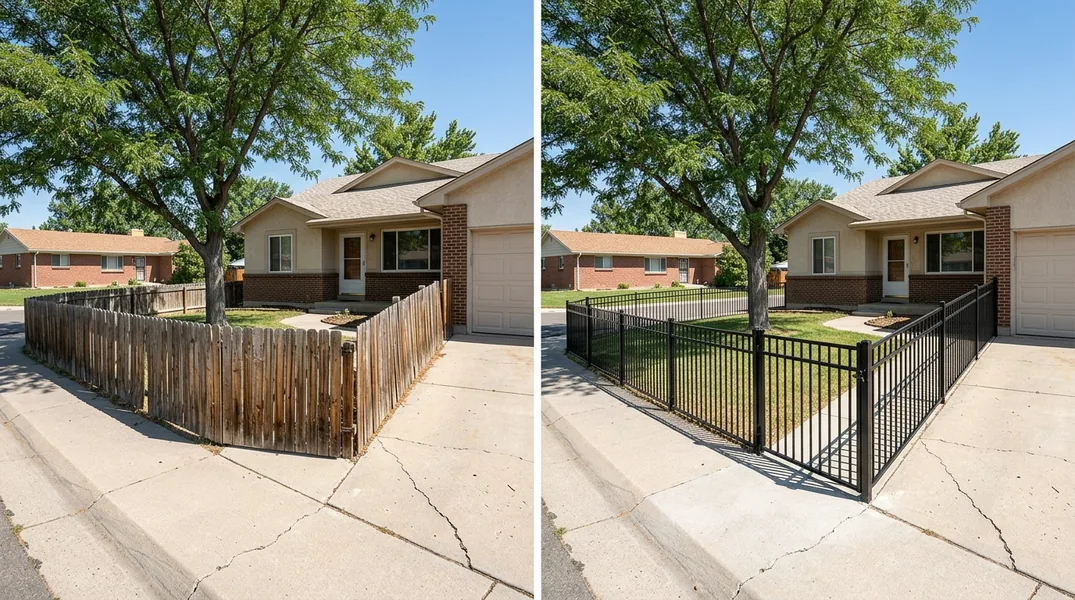
Understanding Denver's Hail Problem and Fence Damage
Denver is no stranger to severe hail storms. The Front Range climate creates conditions where large hail can fall with surprising frequency, particularly during spring and early summer months. Homeowners in the area know that hail damage affects roofs, vehicles, and unfortunately, fences too. When a major hail event strikes, your fence becomes a protective barrier for your property, but it also absorbs significant impact from ice pellets that can be the size of golf balls or larger.
The type of fencing material you choose directly influences how well your property will withstand these natural events. Wood and steel are two of the most popular choices for residential fencing in Denver, but they respond very differently to hail impact. Understanding these differences helps you make an informed decision about which material best suits your needs and budget. The consequences of choosing the wrong material can include costly repairs, compromised privacy, and reduced property value.
How Wood Fencing Responds to Hail Damage
Wood & Privacy Fence Installation remains a top choice for Denver homeowners because of its natural appearance, privacy benefits, and customizable design options. However, wood has specific vulnerabilities when it comes to hail. When large hail strikes wooden fence boards, it can create dents, cracks, and splintering. The damage is often visible and can affect the structural integrity of individual boards. A single severe hail storm might dent multiple boards across your fence line, requiring replacement of damaged sections.
Beyond the immediate surface damage, hail events can create openings in your fence where water penetrates the wood grain. This moisture exposure accelerates rot and decay, particularly if the wood wasn't properly sealed or maintained. Over time, water damage leads to fence post replacement needs and compromised structural support. The good news is that individual boards can be replaced without rebuilding your entire fence, making targeted repairs more affordable than a complete reinstallation. However, if hail damage is extensive across many sections, your repair costs can add up quickly.
Steel Fencing: Durability Against Hail Impact
Steel fencing offers superior resistance to hail damage compared to wood. The material's inherent strength means that hail impact, even from large stones, typically causes only minor denting rather than structural failure. Steel doesn't splinter, crack deeply, or create openings for water infiltration the way wood does. For homeowners prioritizing durability and minimal maintenance after severe weather events, steel fencing delivers better long-term performance in Denver's hail-prone climate.
The trade-off with steel is that it requires different maintenance to prevent rust and corrosion. Steel fencing must be properly coated with rust-resistant paint or powder coating to protect against moisture and oxidation. When maintained correctly, steel can last decades with minimal weather-related repairs. However, if the protective coating is compromised by hail impact and not repaired promptly, rust can develop over time. Steel also tends to be more expensive upfront than wood, though the reduced repair frequency over the fence's lifetime can offset this initial investment.
Fence Post Damage: The Hidden Hail Problem
While hail damage to fence boards gets most of the attention, the real structural vulnerability lies beneath the surface. Fence posts bear the load of the entire fence structure and support the boards that take direct hail impact. When severe hail strikes a fence repeatedly over the years, the cumulative stress can weaken posts, especially wooden ones. Fence post repair and fence post replacement become necessary when posts begin to lean, crack, or show signs of instability.
Wooden posts are particularly susceptible to hail-related damage because they absorb impact force directly. When hail strikes near a post or the boards connected to it, the shock travels down to the post itself. Combined with moisture penetration from hail damage to boards above, wooden posts can develop rot that undermines their strength. A leaning fence repair often requires complete post replacement rather than simple reinforcement. Steel posts, by contrast, distribute impact force more effectively and resist rot entirely, making them a more reliable choice for long-term stability in hail-prone regions.
Maintenance and Repair Considerations After Hail
After a significant hail event in Denver, prompt inspection and repairs are essential to prevent minor damage from becoming major structural problems. Wood fencing requires immediate attention to any cracks or openings where water can penetrate. Sealing or replacing damaged boards prevents rot from spreading to posts and neighboring sections. Steel fencing needs inspection for coating damage that could lead to rust formation. Both materials benefit from professional assessment after major storms to identify issues that might not be immediately obvious to untrained eyes.
The cost of post-hail repairs depends on the extent of damage and your fence material choice. Small board replacements or touch-up painting are relatively affordable, but extensive damage requiring rotted fence post repair or full post replacement becomes significantly more expensive. This is why choosing the right material upfront matters for your long-term budget. Denver Fence Contractors recommends scheduling a professional inspection after any major hail storm to catch damage early and prevent cascading problems. Call us at (720) 573-2902 or request a free estimate to assess your fence's condition.
Making Your Decision: Wood vs. Steel for Denver Hail Protection
Choosing between wood and steel fencing ultimately depends on your priorities regarding aesthetics, budget, and weather resilience. Wood offers the classic, warm appearance that many homeowners prefer, along with lower upfront costs. If you're willing to invest in regular maintenance and accept that hail repairs may be necessary periodically, wood can still be a viable choice. Steel provides superior hail resistance and durability but requires a larger initial investment and ongoing rust prevention maintenance. Neither option is inherently wrong, only different in how they balance cost, appearance, and performance.
For homeowners in Denver concerned about hail damage, a hybrid approach is worth considering. Some property owners install steel posts with wood boards, gaining structural durability while maintaining the wood aesthetic. Others opt for steel fencing in high-impact areas and wood in more protected sections. Denver Fence Contractors specializes in both Wood & Privacy Fence Installation and Aluminum & Ornamental Iron Fencing, and our team can discuss which approach best suits your specific property and climate concerns. Contact us today at (720) 573-2902 to discuss your options and get a free estimate for your Denver fence project.
Looking for a professional tree service in Denver? Denver Fence Contractors responds fast for all your fence needs.
Get a Free Quote